Foam Fire Suppression System | Protecting Generator Rooms, Fuel Tanks & Oil Hazards
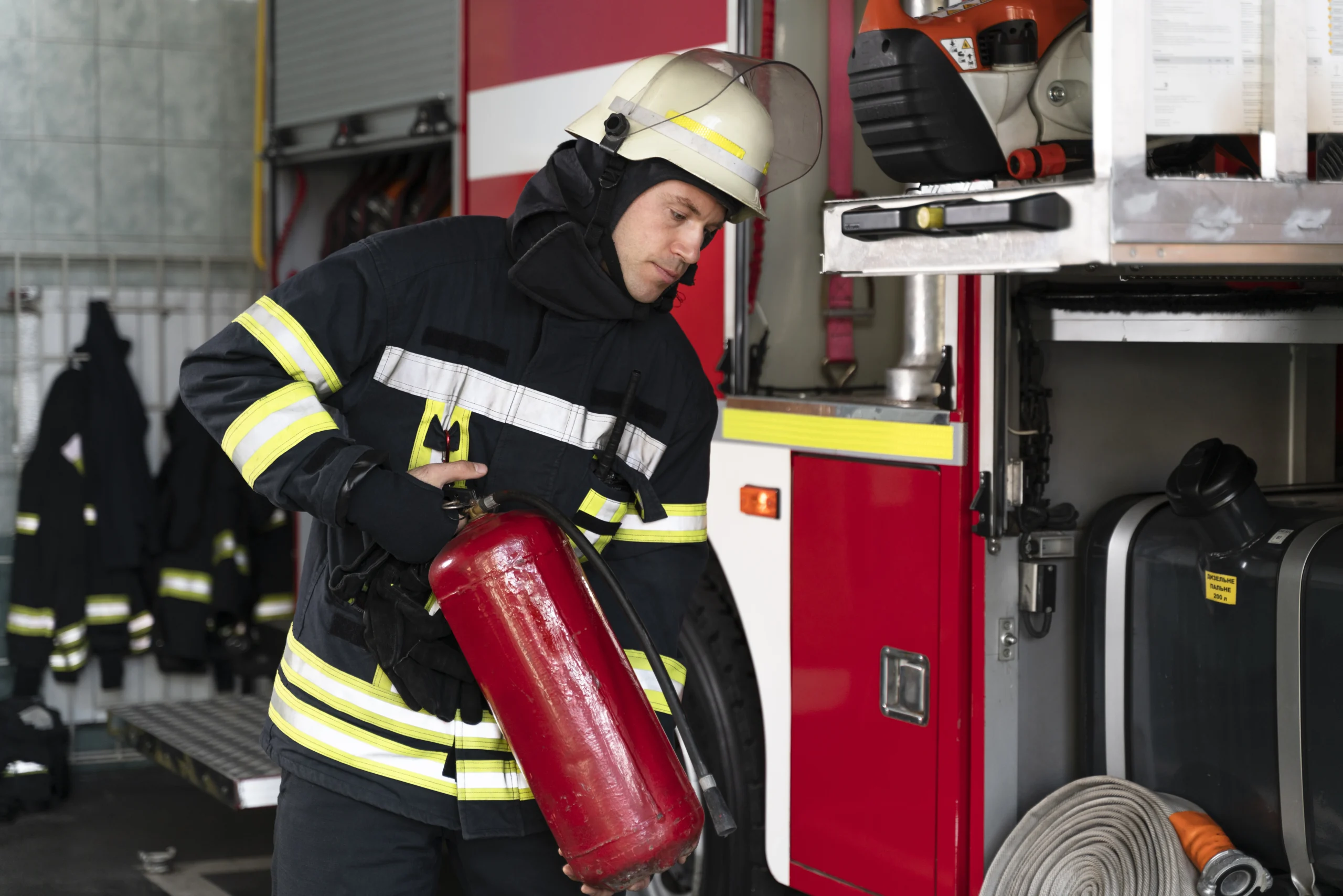
A single spark is all it takes to turn a generator room or fuel storage area into a serious fire emergency. In environments where diesel, oil, and other flammable liquids are stored or used, traditional water-based fire protection often cannot stop a fast-spreading fuel fire effectively. That’s why businesses across industrial, commercial, and infrastructure sectors rely on a foam fire suppression system. Designed to rapidly blanket flammable liquids, suppress dangerous vapors, and cut off the fire’s oxygen supply, fire suppression foam provides fast, reliable protection for high-risk areas such as generator rooms, fuel tanks, oil storage facilities, and pump rooms. Investing in the right foam-based fire protection system not only minimizes damage and downtime but also helps safeguard people, critical assets, and business continuity.
Why Water Alone Doesn’t Work on Oil and Fuel Fires
Ordinary combustible fires (wood, paper, fabric) respond well to water. Flammable liquid fires behave completely differently. Fuels like diesel, gasoline and other hydrocarbons float on water, so a water-based response can spread burning liquid across a wider area instead of putting it out. These are classified as Class B fires, and they need a suppression method that can smother the fuel surface and stop it from re-igniting.
Foam solves this problem by doing three things at once:
- Smothering the fire – A blanket of foam spreads across the surface of the fuel, cutting off its oxygen supply.
- Sealing in flammable vapors – The foam layer stops fuel vapors from escaping and reigniting.
- Cooling the fuel – The water content inside the foam helps lower the surface temperature of the burning liquid, reducing the chance of flashback once the foam breaks down.
This combination is why foam-based systems, rather than plain water sprinklers, are the standard choice for any space where oil, diesel, or other flammable liquids are present.
Where Foam Fire Suppression Systems Are Used
Any facility that stores, handles or runs equipment on flammable liquids is a candidate for a dedicated foam fire suppression system. In Qatar, the most common applications include:
- Generator rooms – Backup diesel generators in hotels, hospitals, data centers, malls and residential towers all carry fuel and oil hazards that standard sprinklers can’t safely address.
- Fuel and diesel storage tanks – Whether above-ground or in-ground, storage tanks need protection that can respond to a surface fire without spreading burning fuel further.
- Fuel loading and transfer areas – Loading racks, pump rooms and pipeline manifolds where fuel handling creates ongoing exposure risk.
- Workshops, plant rooms and industrial facilities – Anywhere oil-based lubricants, hydraulic fluids or fuel are stored or used in bulk.
Types of Foam Concentrate We Work With
Foam fire suppression system relies on a handful of specialized concentrates, each suited to different fuel types, hazard levels and, increasingly, environmental requirements. At Filcomfire, we supply and design around the following:
- Aqueous Film-Forming Foam (AFFF) – One of the most established concentrates, it spreads a thin aqueous film across the fuel surface to knock down flame and suppress vapors quickly. Well suited to hydrocarbon fuels such as diesel and gasoline.
- Alcohol-Resistant AFFF (AR-AFFF) – Built on the same film-forming principle as AFFF, but formulated to resist breakdown from polar solvents and alcohol-based fuels, which would otherwise destroy a standard AFFF blanket.
- Alcohol-Resistant Synthetic Fluorine-Free Foam (AR-SFFF) – A newer generation synthetic concentrate that handles both hydrocarbon fuels (diesel, gasoline, crude oil) and polar solvents, without relying on fluorinated chemistry. It forms a long-lasting, vapor-sealing blanket with strong burn-back resistance, making it a capable alternative wherever a fluorine-free solution is preferred or specified.
- Fluorine-Free Foam (F3) – Where a project specification calls for it, we can supply fully fluorine-free foam options across our range. These concentrates are free of fluorosurfactants and fluoropolymers (PFAS/PFOA), giving the same core fire and vapor suppression performance while addressing the growing environmental and groundwater concerns associated with older fluorinated foams. Many jurisdictions, including several across the Middle East, are moving toward fluorine-free requirements, so we make sure this option is available whenever a spec calls for it.
The right concentrate depends on the fuel type being protected, the size of the hazard, the water source (fresh, sea or brackish), and any environmental or spec-driven requirements for the site which is why an experienced fire safety partner should always be involved in the selection process, not just the installation.
Understanding 3% and 6% Foam: A Proportioning Question, Not a Fuel-Type Question
A common misconception is that 3% and 6% foam concentrates are chosen based on the type of fuel being protected or the severity of the hazard. In practice, both percentages exist to do the same job extinguish and blanket a Class B fire and the choice between them comes down to how the system is engineered to mix, or “proportion,” concentrate with water, not what the concentrate is protecting against.
What the percentage actually means
The 3% or 6% figure describes the proportioning rate: the ratio of foam concentrate to water in the finished foam solution. A 3% system mixes 3 parts concentrate with 97 parts water; a 6% system mixes 6 parts concentrate with 94 parts water. Recognised design standards such as NFPA 11 set tight tolerances around these figures for example, a 3% concentrate must be proportioned within a narrow band above 3%, and a 6% concentrate within a corresponding band above 6% because under-proportioning weakens the foam blanket and over-proportioning wastes concentrate and can affect discharge performance.
Why two percentages exist at all
Historically, protein and fluoroprotein foams were often formulated at 6%, while AFFF and AR-AFFF concentrates tended toward more efficient 3% (and in some cases 1%) formulations, requiring less concentrate to achieve the same finished-foam performance. That said, both 3% and 6% AFFF/AR-AFFF products remain in active use today, and when each is correctly proportioned by equipment calibrated for it a 3% solution and a 6% solution deliver equivalent expansion, drainage time and vapor-suppression performance. The finished foam blanket is what matters for fire performance, not the concentrate percentage that produced it.
Why the distinction matters for system design
Because the percentage is a hardware calibration, not a fuel-based choice, it has direct implications for design and maintenance:
- The proportioning equipment orifice sizes, pickup tubes, metering valves or ratio controllers is calibrated at the factory for a specific percentage. A 3% proportioner will not correctly meter a 6% concentrate, and vice versa; mismatching the two produces an incorrectly mixed, under-performing foam blanket.
- Concentrate percentage should never be substituted or “topped up” across systems without confirming compatibility with the installed proportioning equipment.
- Annual testing of the proportioning system, not just the concentrate itself, is required to confirm the actual proportioning rate stays within the tolerances the design standard permits.
This is precisely why concentrate selection and proportioning-system design need to be handled together by an experienced foam system designer, rather than treated as two separate decisions.
How Foam Gets Mixed: Proportioning Methods
Delivering the correct, consistent percentage of concentrate into the water stream under varying flow and pressure is one of the more technically demanding parts of a foam system. The main proportioning methods used in fixed installations are:
- Bladder tank proportioners – A pressurized vessel holds concentrate inside a flexible bladder. Firewater pressure squeezes concentrate out of the bladder and through a venturi-based proportioner, inducing it into the water stream without needing a separate pump or power source. This is a well-established, relatively low-maintenance option for generator rooms and tank protection.
- Balanced pressure proportioning – A dedicated foam pump delivers concentrate at a pressure matched to the water supply, through a ratio controller, keeping the mix accurate even as flow demand changes. It requires more equipment and a power source but performs well across variable or larger-flow systems.
- In-line eductors – Concentrate is drawn into the water stream using the pressure drop created as water passes through a venturi. These are simple and low-cost, but flow range and back-pressure tolerance are limited, and accuracy can suffer if inlet pressure varies from the design point.
- Around-the-pump proportioners – Concentrate is injected using a jet pump connected across the main fire pump. These are common on mobile and vehicle-mounted systems but generally need re-adjustment whenever system flow changes, and aren’t suited to systems where some discharge points need plain water and others need foam solution.
Whichever method is used, the system must be designed so that the proportioner, the discharge devices and the foam concentrate are matched to one another; a component mismatch anywhere in that chain can undermine the whole system’s performance.
Low, Medium and High Expansion Foam
Foam fire suppression system are also categorized by their expansion ratio how much the foam expands once air is mixed in with the concentrate and water:
- Low-expansion foam forms a dense, heavy blanket that sits directly on the fuel surface, ideal for tanks and open liquid spills.
- Medium-expansion foam covers larger areas such as bunded areas, trenches, and spill containment zones.
- High-expansion foam fills enclosed spaces quickly, making it well suited to generator rooms, basements, and other confined areas where a fast, total-flood response is needed.
Choosing the correct expansion type is a key part of designing a system that actually performs when it’s needed, rather than one that simply looks good on paper.
Fixed, Semi-Fixed and Portable Systems
Depending on the hazard, a facility may need:
- Fixed systems – Permanently piped from a central foam station to fixed discharge outlets, ideal for high-value or continuously monitored risks like generator rooms and tank farms.
- Semi-fixed systems – Fixed discharge outlets connected to piping that draws from a separate foam source, offering flexibility for larger sites.
- Portable and mobile units – Hose reels and mobile foam units for manual intervention or smaller, lower-risk areas.
Why Design Standards Matter
Foam fire suppression system isn’t something to improvise. Recognised standards define exactly how these systems should be designed, installed, tested and maintained covering everything from proportioning tolerances and discharge rates to storage capacity for the foam concentrate itself. Working with a supplier and installer who designs strictly to these standards is the only way to be confident that a system will actually perform during a real fire, not just during a routine inspection.
Choosing the Right Foam Fire Suppression System Partner in Qatar
Before committing to a system, it’s worth checking that your supplier can answer clearly on:
| Factor | Why It Matters |
| Compliance with recognised foam system standards | Confirms the design will actually perform in a real fire |
| Correct foam concentrate and proportioning rate for your system | AFFF, AR-AFFF, AR-SFFF and fluorine-free foams and their 3%/6% proportioning equipment are not interchangeable |
| Site-specific hazard assessment | Generator rooms, tanks and loading areas each need different solutions |
| Ongoing testing and maintenance support | Both the concentrate and the proportioning equipment must be tested and serviced to stay reliable |
| Local availability and fast response | Reduces downtime if a system needs servicing or a concentrate top-up |
Get a Foam Fire Suppression System System Built for Your Facility
At Filcomfire, we design and supply foam fire suppression systems specifically for facilities dealing with oil, diesel and other flammable liquid hazards generator rooms, fuel storage tanks, transformer areas and industrial fuel-handling sites across Qatar. Our team assesses each hazard individually, recommends the correct foam concentrate, proportioning method and expansion type, and ensures every system is installed and tested to recognised fire safety standards.
We understand that a foam suppression system is not a one-size-fits-all product. A generator room needs a different response than an open fuel tank, and a fuel loading area needs a different approach again. That’s why our process starts with understanding your specific hazard, not just supplying a generic solution.
Frequently Asked Questions
1. What is a foam fire suppression system used for?
It’s used to protect areas where flammable liquids like diesel, fuel oil or other hydrocarbons are present such as generator rooms and fuel tank storage by smothering the fire and sealing in flammable vapors.
2. Can foam suppression systems be used in generator rooms?
Yes. Generator rooms are one of the most common applications, since they combine fuel, oil and electrical risk in a single enclosed space.
3. What type of foam is best for fuel and oil fires?
It depends on the fuel type and any project spec. AFFF and AR-AFFF are common choices for hydrocarbon and polar-solvent fuels, while AR-SFFF and other fluorine-free (F3) foams offer the same fire and vapor suppression performance without fluorinated chemistry, and are increasingly requested where environmental compliance is a requirement.
4. What’s the difference between 3% and 6% foam concentrate?
The percentage describes how the proportioning system is calibrated to mix concentrate with water, not the type of fuel or fire hazard. When correctly proportioned by equipment built for that percentage, 3% and 6% concentrates deliver equivalent finished-foam performance. The two are not interchangeable within the same equipment without recalibration.
5. Does Filcomfire design foam systems for fuel storage tanks?
Yes, Filcomfire designs and Foam Fire Suppression System solutions for fuel and diesel storage tanks, generator rooms and other oil-hazard areas across Qatar
Recent Posts
Foam Fire Suppression System | Protecting Generator Rooms, Fuel Tanks & Oil Hazards